Accueil » PROBIOFOL
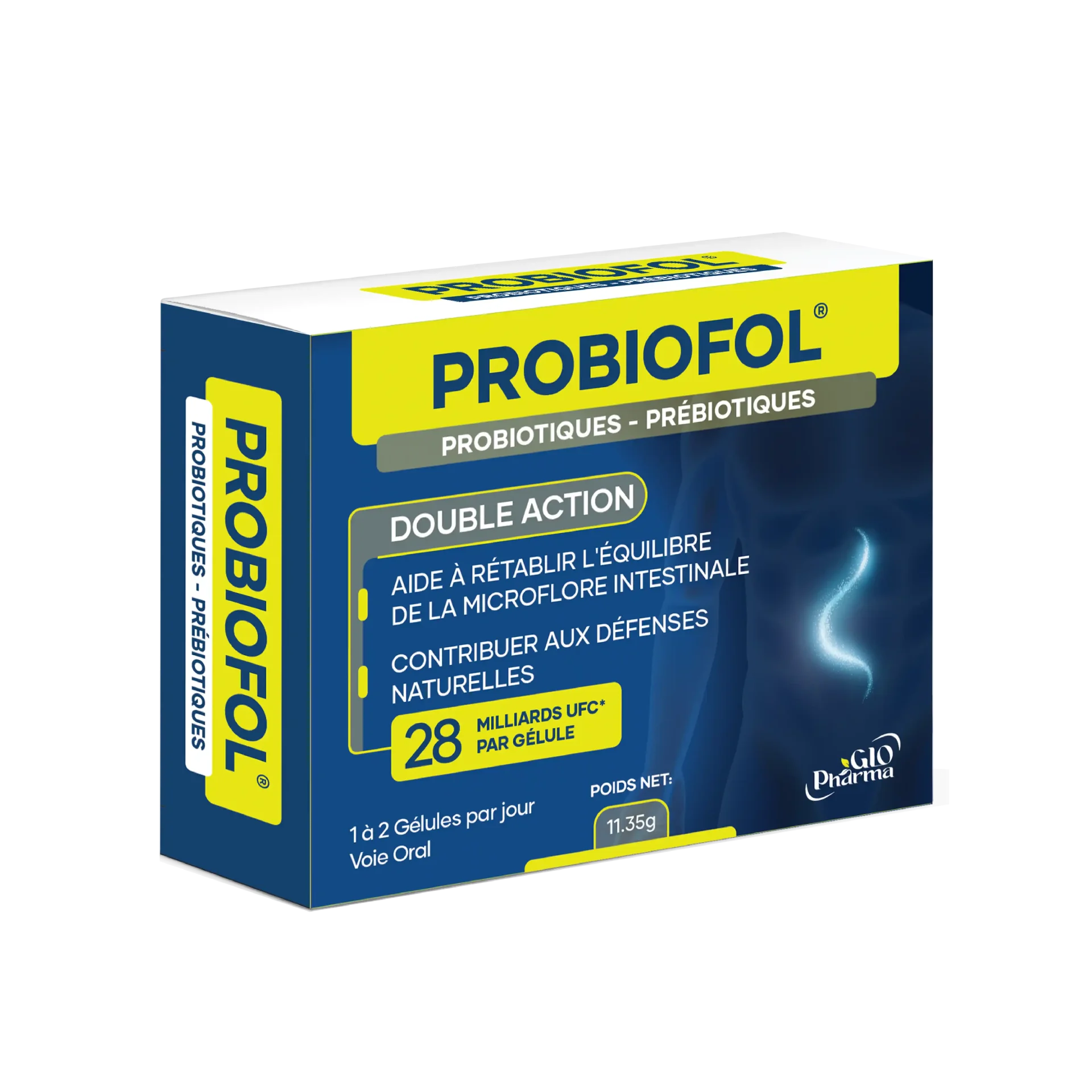
PROBIOFOL
Probiotics, prebiotics
- Synergistic action: 3 probiotic strains and 1 prebiotic source
- Helps restore the balance of the intestinal microflora
- Contributes to the body's natural defences
- 28 billion CFU per capsule
- 3 pack sizes to suit your needs
Selected concentrated active ingredients
High-bioavailability ingredients
Effective formulas
Manufactured to pharmaceutical standards
Recommended by healthcare professionals
Probiotics & prebiotics, the winning duo
The gut microbiota plays a key role in digestion, immunity and overall health. Yet it is often disrupted by:
- Antibiotics
- Digestive infections (diarrhoea, gastroenteritis)
- Stress
- An unbalanced diet
These imbalances can cause bloating, abdominal pain, diarrhoea or constipation, and weaken the immune defences.
A formula optimised for rebalanced digestion and better digestive tolerance
Probiofol naturally restores intestinal balance through its synergistic formula containing 28 billion CFU per dose, combining specific probiotics and prebiotics.
3 probiotic strains
- Bifidobacterium spp.: supports colonic balance and transit.
- Lactobacillus rhamnosus: protects the mucosa and supports the immune system.
- Saccharomyces boulardii: a probiotic yeast that acts as a natural anti-diarrhoeal, ideal when taking antibiotics. It is also useful against Helicobacter pylori.
1 prebiotic source
Artichoke fibre: artichoke is naturally rich in fibre, particularly inulin, a prebiotic that stimulates the growth of beneficial bacteria in the gut.
3 formats to suit every need
- Probiofol 10 capsules: ideal for short courses (travel, acute diarrhoea, alongside antibiotics).
- Probiofol 20 capsules: a 2 to 3 week course (mild IBS, post-antibiotic prevention).
- Probiofol 30 capsules: a full 1-month course (chronic digestive disorders, adjunct for H. pylori, recurrent IBS).
Who is Probiofol for?
Probiofol is suitable for anyone wishing to support their gut health and overall wellbeing:
- those experiencing digestive discomfort (bloating, irregular transit),
- athletes, to protect their gut flora during intense exertion,
- people who are stressed or fatigued, whose lifestyle may unbalance the microbiota,
- anyone wishing to prevent or restore their gut health, particularly after a course of antibiotics.
Nutritional composition
COMPOSITION | Per capsule |
|---|---|
Saccharomyces boulardii | 20 billion CFU |
Lactobacillus rhamnosus | 5 billion CFU |
Bifidobacterium bifidum | 3 billion CFU |
Artichoke fibre | 100 mg |
-
List of ingredients
Saccharomyces boulardii (20 billion CFU), Lactobacillus rhamnosus (5 billion CFU), Bifidobacterium bifidum (3 billion CFU), artichoke fibre: 100 mg, microcrystalline cellulose: 15 mg, vegetable capsule shell: 95 mg.
-
Directions for use
Adults: take 1 to 2 capsules, 1 to 2 times a day, swallowed with a large glass of water. Children: 1 capsule a day. For children under 6, it is recommended not to swallow the capsules whole (risk of choking) but to open them and pour the contents into water.
-
Usage guide
Maintenance / prevention: 1 capsule/day. Acute conditions or antibiotic use: 2 capsules/day (morning & evening). Course of 4 to 8 weeks depending on indication.
-
Precautions for use
Do not exceed the recommended daily dose. To be used as part of a varied, balanced diet and a healthy lifestyle. Keep out of reach of young children. Store away from light, moisture and heat.
This food supplement is not a medicine.
Take care of your gut microbiota
Your digestive system, and your colon in particular, is home to nearly 100 trillion micro-organisms. This fascinating ecosystem, known as the gut microbiota, is essential to your overall health and wellbeing.
It plays a part in numerous key functions:
- Protecting the intestinal barrier, by lining the intestinal cells.
- Supporting digestion and nutrient assimilation, by breaking down fibre, promoting nutrient absorption and producing certain vitamins and fatty acids.
- Maintaining the balance of the flora, by encouraging the development of « good bacteria » and limiting that of undesirable micro-organisms.
- Strengthening the natural defences, through its interaction with the immune system and the production of antimicrobial substances.
But this balance is fragile. When disrupted, it can result in bloating, irregular transit or increased intestinal sensitivity.
To preserve this harmony, it is essential to nourish and strengthen your gut flora.
- Probiotics provide the gut directly with beneficial bacteria.
- Prebiotics act as « fuel » for these good bacteria, supporting their growth and effectiveness.
Probiofol is a unique complex combining probiotics and prebiotics, designed to support the balance of your microbiota and provide you with lasting digestive comfort.

Frequently asked questions
When should probiotics be taken?
Probiotics can be taken daily to support the gut flora, or in specific situations such as after antibiotic treatment, in the event of temporary digestive disorders, or to strengthen the body’s natural defences.
It is advisable to take them at a regular time, preferably in the morning and away from meals.
Where can I buy PROBIOFOL?
You can buy our PROBIOFOL food supplement from pharmacies in Morocco. Do not hesitate to ask your pharmacist for advice.
Do I need to keep PROBIOFOL in the fridge?
We use freeze-dried strains, which keep the bacteria dormant, making them stable at room temperature. They reactivate on contact with moisture in the body. It is therefore not necessary to store them in your refrigerator.
Which foods are richest in probiotics?
Certain fermented foods are good sources: lben (fermented milk), yoghurt, fresh cheese, as well as preparations such as fermented cabbage. These products contain bacteria that are beneficial for the gut flora.
Which foods are rich in prebiotics?
In Morocco, prebiotics are found in foods such as garlic, onion, leek, lentils, chickpeas and beans, banana, as well as in certain wholegrain cereals consumed locally (wholewheat, barley, oats, rye).
What is the gut microbiota?
The gut microbiota, or intestinal flora, is the collection of non-pathogenic micro-organisms present in our digestive tract. It begins to form at birth and plays a part in:
- the assimilation of nutrients, fatty acids and minerals,
- the regulation of intestinal transit,
- the production of serotonin (the « happiness hormone »),
- the synthesis of vitamin K, certain B vitamins and certain essential amino acids,
- overall metabolic function.